Artificial Intelligence for Global Health
Countries
Nigeria, Ethiopia, Uganda, Namibia, Tanzania, Ghana, Kenya, Cabo Verde, South Africa, Senegal, Cameroon, Democratic Republic of the Congo, Jordan, Qatar, Morocco, Lebanon, Pakistan, Argentina, Brazil, Dominican Republic, Peru, Jamaica, Colombia, Guatemala, Bangladesh, Nepal, Sri Lanka, Indonesia, Philippines, Malaysia, Mongolia, Turkey, Tunisia and Canada
Policy, Health
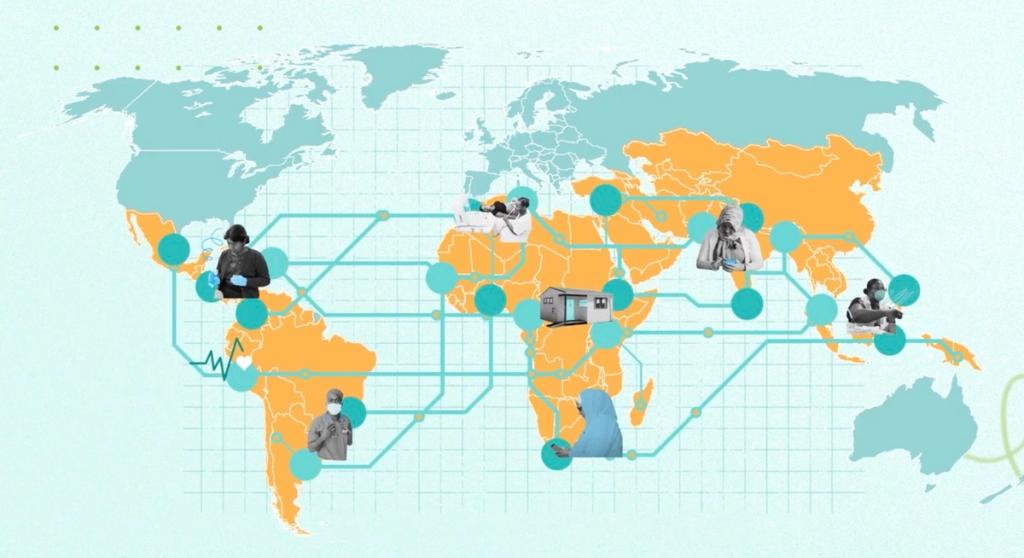
The AI4GH initiative supports robust, innovative and interdisciplinary research projects and processes across sub-Saharan Africa, Asia, Latin America and the Caribbean, and the Middle East and North Africa. Each activity within AI4GH promotes ‘responsible AI’ (solutions that are ethical, inclusive, rights-respecting and sustainable) that aims to strengthen gender equality and inclusion, and integrate plans for sustainability, scale and influence. This initiative aims to build regional and global networks across a range of actors, including researchers, policymakers, practitioners, the private sector and civil society.
Related Content

Policy
HealthAI: Building Regulatory Mechanisms for Responsible Artificial Intelligence for Health in Africa

Innovation Networks
Scaling and Sustaining AI Solutions to Improve Sexual, Reproductive and Maternal Health in Sub-Saharan Africa (HASH 2.0)
Innovation Networks
Scaling Responsive and Responsible Artificial Intelligence for Improving Sexual, Reproductive and Maternal Health in South Asia
Innovation Networks
AI Solutions for One Health Approaches to Epidemic and Pandemic Prevention and Response: Scale, Inclusion and Impact
Innovation Networks
Amplifying the Impact of Artificial Intelligence in Global Health Through Knowledge Sharing, Evaluation and Learning
Innovation Networks
Scaling and Sustaining Artificial Intelligence Solutions to Improve Sexual, Reproductive and Maternal Health in LAC
Innovation Networks
Towards Responsible Adoption of Artificial Intelligence for Global Health and Development in the Middle East and North Africa
Innovation Networks
Leveraging Artificial Intelligence and Mathematical Modelling for Evidence-Based Prevention and Response to Mpox